Banks operate multiple distinctly different business lines, and thus, different technology platforms—retail banking, personal/commercial lending, and wealth management are a few of the most common across banks. When banks merge or acquire another bank, the primary integration focus is on the retail banking, lending, and commercial banking systems and bringing in experts in those systems to manage the process. Often the same integration teams handle the banks’ wealth management platforms as well. But those experts aren’t necessarily well-versed in the wealth management tech stack, and similar effort needs to be put in to bring in experts to manage that side of the house.
Banks that undergo a separate analysis and build a strategy for integrating the specific components of the wealth trust advisory platform capitalize on a unique opportunity to strengthen their wealth management offering. This work requires a unique dedicated resource with expertise in wealth management technology. It should start immediately after the M&A announcement to establish how the private banking and wealth businesses should come together from operational, client service, and advisor perspectives.
What is best for the combined wealth business may not match what is best for the retail banking business
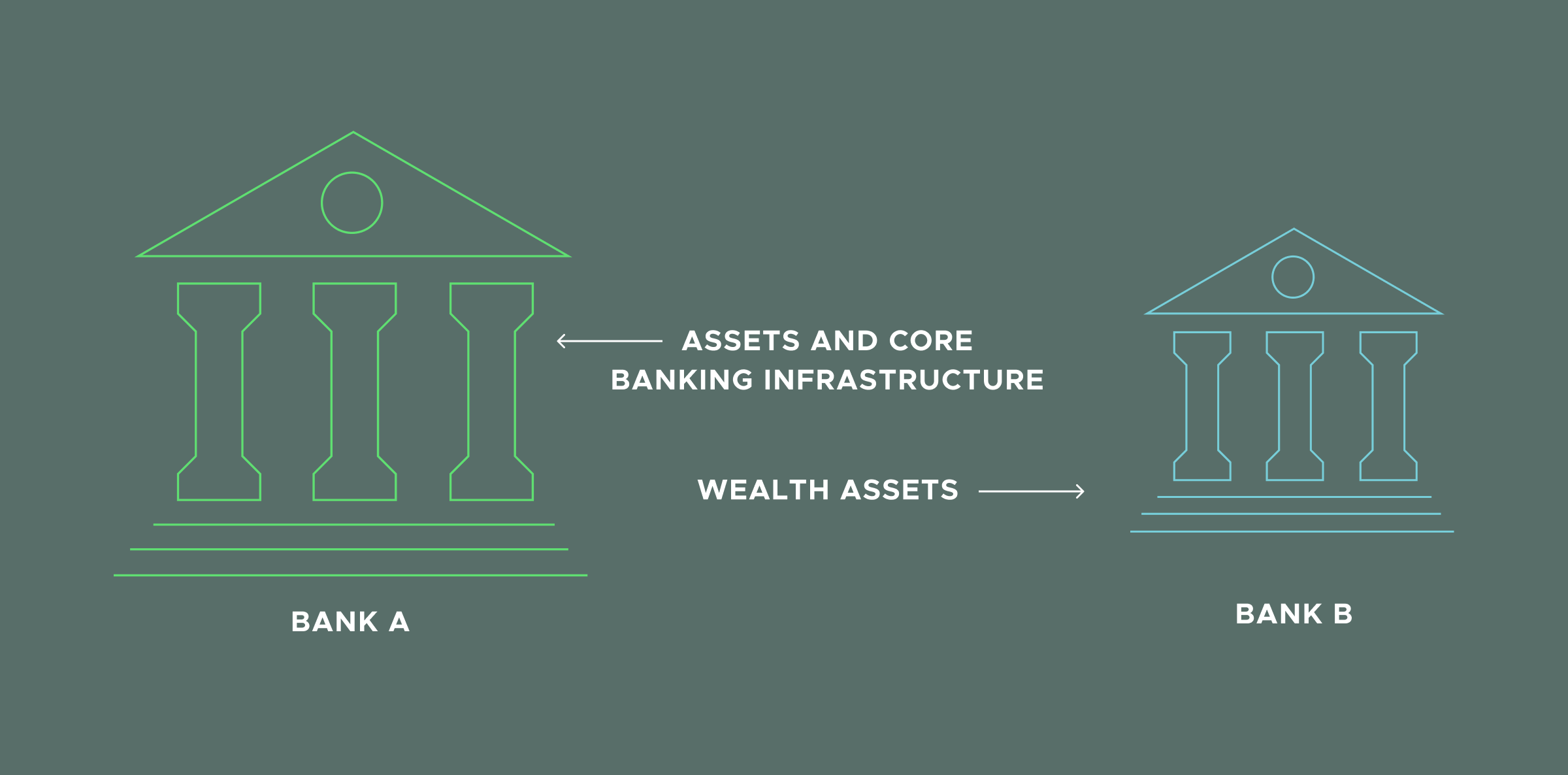
EXAMPLE
Bank A acquires Bank B.
Bank A is the larger, more mature retail banking arm. Bank B has a more mature trust accounting platform and portfolio management capabilities.
In this scenario, achieving the best outcome for the combined wealth businesses means the new bank would move assets and the core banking infrastructure onto Bank A's platform, but move wealth assets to Bank B’s platform.
Sign up to get industry insights delivered directly to your inbox

Here are five ways independent wealth management integration experts support banks’ post-M&A technology migration and integration needs:
Building a Strong Foundation in the Early Days: Understanding the Why
The period between the M&A announcement and legal day one is the ideal time to begin the wealth management platform integration analysis. Bringing in experts early on to understand the approach and answer foundational questions—is one bank acquiring another or are two banks merging? What are the reasons behind the merger? Was it to strengthen the balance sheet? Was it to add a component to the overall service that one bank had, and the other bank didn't?
Understanding the why behind the M&A is an important first step that will inform your approach to organizational and technology integrations.
Using a Different Lens: Merging Different Vendor Technology and Workflows
Banks don't manage the interactions around investment accounts or retirement accounts the same way they do retail checking accounts or mortgages. They are unique and different services that require different technology, different operating models, and different vendors. A bank’s core banking platform has one set of client profiles. It stores data in a certain way and uses vendor technology to support workflows specific to that banking function. Its wealth business uses different profiles, technology, and workflows to support wealth business or trust accounting functions. Using a wealth and trust lens as opposed to the broader bank strategy lens helps the bank make strategic decisions that will maximize its technology investment.
Opportunities During Integration: Future State Design
Mergers occur for many reasons. As firms plan their integration approach, understanding the strategic objectives of the merger, or defining the strategic intent or opportunity of bringing together two bank-based wealth businesses can be a critical early step in the process. These types of integration moments offer you the rare chance to consider your operational workflows, as well as key client facing experiences, including account opening, client onboarding, and cash management activities. Take this time to identify the best of what each bank does and establish the right combinations of technologies to bring those functions together and design a good future state that advances both of the legacy businesses.
Funding Technology Enhancements: Take Advantage of Merger Accounting
Mergers and acquisitions offer a golden opportunity to invest in tech stack modernization. If you make investment decisions on moving to a new platform or going through a redesign or an integration activity within the scope of an acquisition, you can put all of the costs associated with that effort into the overall acquisition cost and keep it separate from your ongoing technology and operations investment. It’s a good accounting nuance to consider when deciding whether to act or wait on important projects that will upgrade your front-office and back-office capabilities.
Change Management: The Power of a Documented Plan
There's a big and sometimes complicated change management component that goes along with any M&A activity. Internally, a large portion of the combined organization will be rebadged, work for a new company, get a new e-mail address, and go through many unavoidable changes. Having a clear message around what you are considering from an operating platform, what will not change, and a timeframe for the decision making and changes will have a calming effect on the internal teams.
Externally, vendors who work with both sides always come knocking on the door, wanting to know where they stand, and what you are going to do in the combined organization. Is there an opportunity for them? Are they at risk of losing your business? Having a documented plan for how you will make these decisions and communicating something to your vendors about your approach will help cut out some of the external noise.
Maximizing Strengths: Bringing the Best of Both Worlds Together to Maximize Value
Mergers and acquisitions offer the rare chance to look at all of the tools that both parties leverage and create an operating model that leverages the best of both of them. When done with strategic thought specific to wealth management and led by wealth management technology experts, banks can advance their businesses much more quickly than using technology experts with different banking systems expertise.
Contact us to learn how F2 partners with banks on merger and acquisition integrations.
.png)