
In 2025, F2 Strategy conducted research among its national cohort of CTOs, COOs, and CEOs at 85 RIAs, Wealth Managers, Broker/Dealers, and Asset Managers representing more than $61 trillion in assets under management (AUM) in its assessments of the industry. The research covered four main topic areas: alternative assets, AI, custody, and organic growth. In each of these areas, the role of technology became clear as the defining line between winners and losers. In a review of the year’s trends, F2 researchers noted that there are a lot of gaps in the industry’s ability to harness the power of technology for better client experiences and operational efficiency.
He continued, “For our industry to be successful, we need to see broader adoption of technology to manage the growing alternative investments allocations and to power marketing engines because far too many firms are relying heavily on M&A to grow. And finally, these firms that became giant institutions overnight need to explore the self-clearing model.”
Banks and trust firms are woefully behind their RIA counterparts when it comes to AI adoption, and all firms—from asset managers to broker-dealers—need to explore what the next generation of AI tools quickly coming to market will enable them to do for clients.
F2’s Annual WealthTech Outlook Report presents a review of five of last year’s biggest trends with how they will drive innovation in 2026:
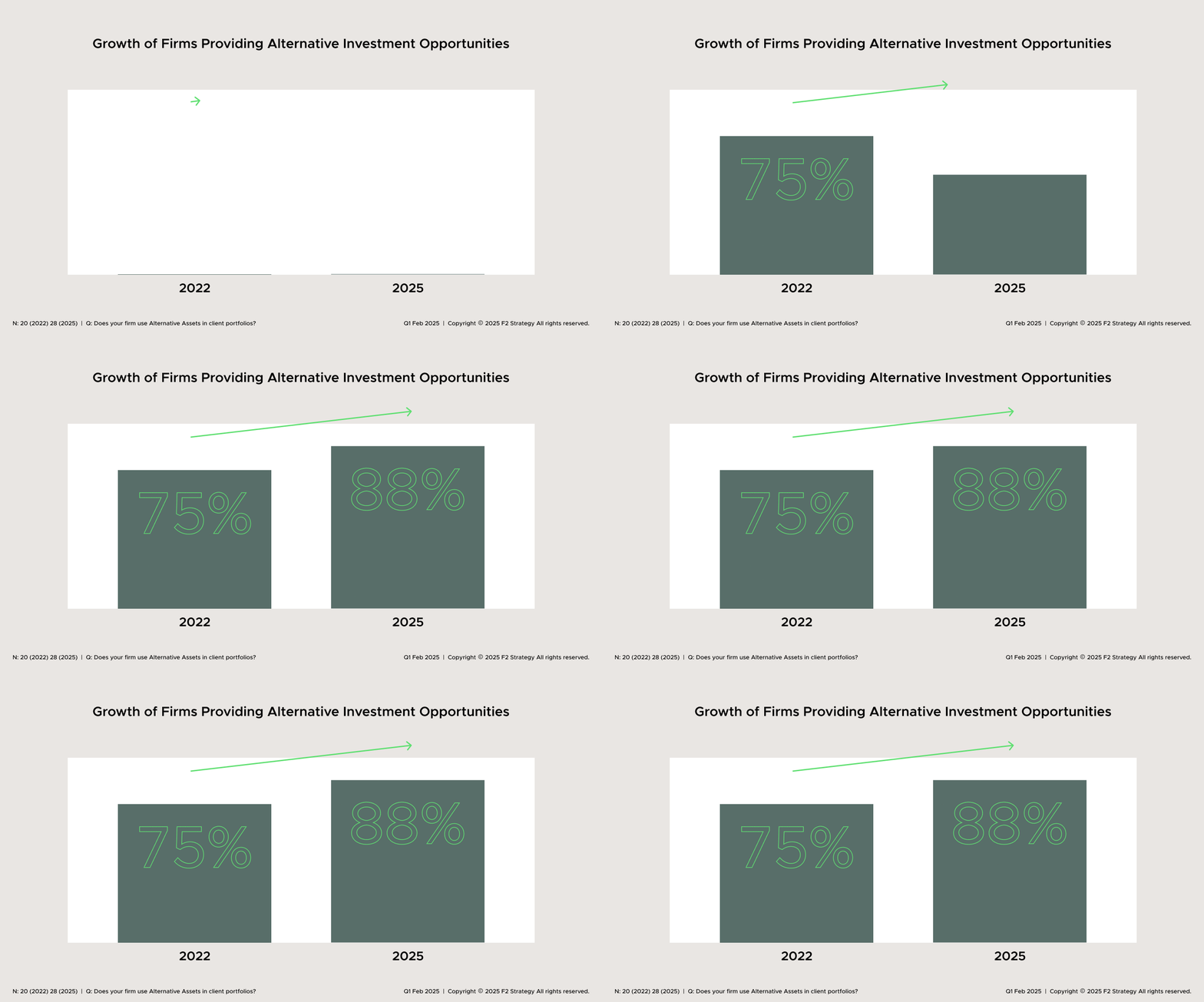
Future Outlook: From 2022 to 2025, the average AUM allocated to alternatives rose from $7.5 billion to $12 billion. Alternative investments have been cleared to enter the retirement space, giving tidal waves of investors and asset management firms access to this class and the opportunity to deploy alternative asset products, respectively. The development drives up valuations, complexity, and operational risks. Today, despite the rise, only 50% of firms report using a third-party tool to manage alternative investments. Firms should use technology to automate illiquid assets and speed up ownership and reporting, but don’t expect to automate speeding up liquidity. Finally, as Blockchain and Distributed Ledger Technology improves, it will continue to cut costs and advance liquidity and transparency of data.
Future Outlook: As more wealth and asset management firms use AI for daily tasks, they report benefits of cost savings, reduced NIGOs, better insights, more preparation for client meetings, and more time for higher-value activities. But saving people time does not equate to growth. In 2026, firms need to give their teams the tools to focus on organic growth, because they will not naturally start cold calling prospects without a strategy.

Future Outlook: Inside the industry, wealth management professionals see investors differently based on where they seek investment advice. Investors don't. To them, there's no outward difference between an advisor working within a bank and an advisor working within an RIA. The problem is the technology and the operations of those two different channels, despite being seemingly identical services to investors, are dramatically different. RIAs have adopted AI and other advanced technologies at a much faster pace than bank-based wealth firms that continue to lag. As a result, they can offer better client experiences and gain increased efficiency in the back office. If this trend continues through 2026, banks will see a significant impact on the marketability and viability of their wealth firms. They have to compete with RIAs on technology, automation, and experience.

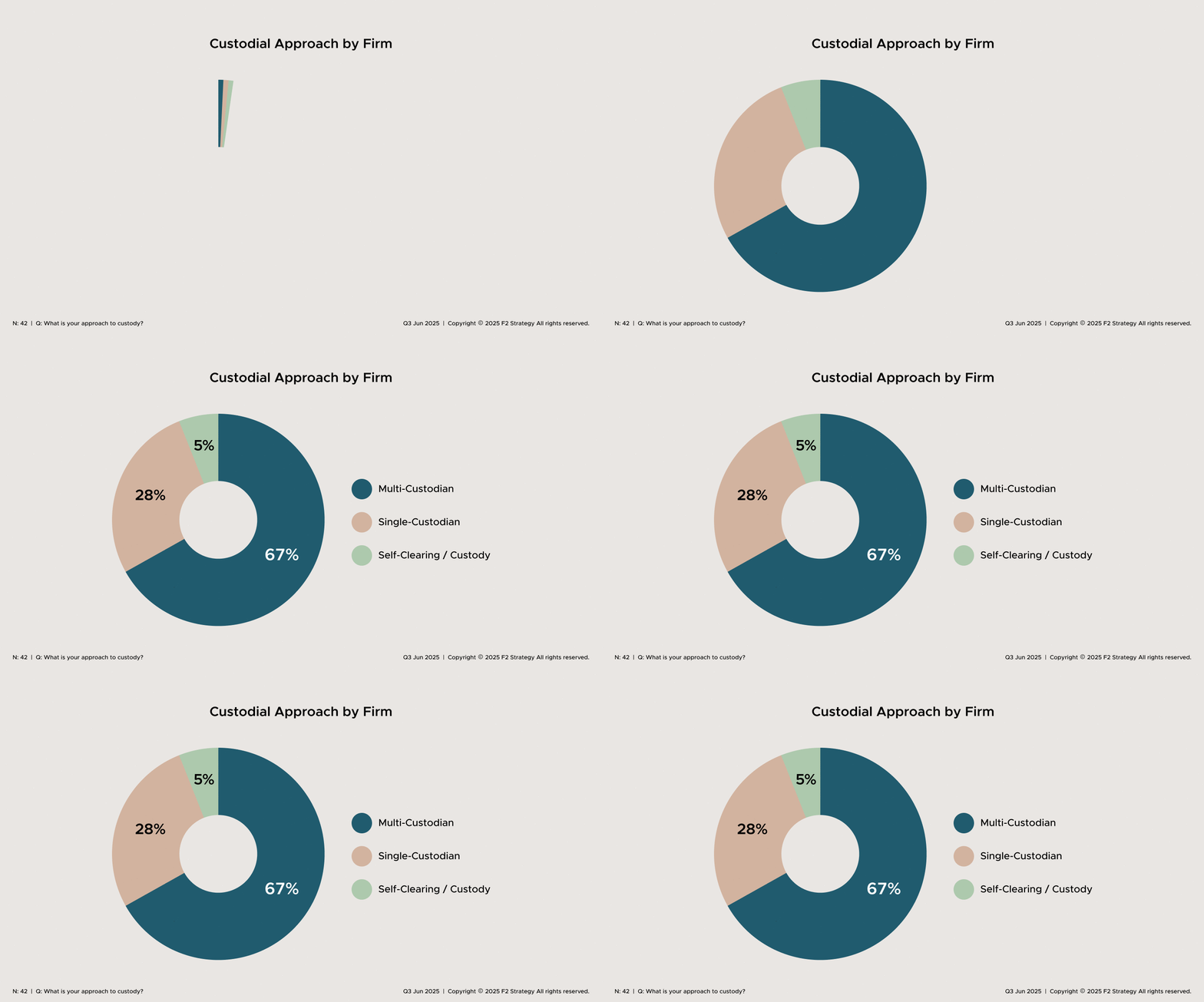
Future Outlook: Two-thirds of wealth firms use multiple custodians because many advisors think moving client assets to a new custodian is hard. Rather than disrupting clients and risk losing them during the process of transferring assets, they add custodians to align with client preferences. Even as large RIAs get larger, they aren’t following the traditional large-firm model of self-clearing but continue with the multi-custody model.
Managing multiple custodians, however, adds complexity and leads to excess work for advisors who must manage a different workflow for each one. It also comes with a cost—costs of the multi-custody model include unifying data, integrating tech stacks and custodians, and maintaining sources of data, transactional fees, and the CRM workflow.
Analyzing the costs versus benefits of multi-custody and single custody in 2026 will help firms decide how to spend their resources in the best manner. For example, could they instead spend those management funds on projects that enhance their value proposition such as building estate planning services or advancing their marketing?
Future Outlook: To date, most wealth management firms do not have a mature marketing function and do not intentionally define or measure what drives growth. They continue to debate a centralized vs decentralized growth process (how much the home office is responsible for vs how much the individual advisor is responsible for when it comes to new business). Over the next year, more firms will push to a centralized marketing model that empowers advisors with data, structure, and KPIs, which will help them make sound decisions on how to grow.
The data in this report is generated from four surveys conducted by F2 Strategy in 2025. The surveys include responses from 160 RIAs, Wealth Managers, and Broker/Dealers representing more than $61 trillion in assets under management (AUM).
F2 Strategy is a leading consulting and research firm modernizing the wealth, asset management, and alternative investments industries. F2 delivers executive-level technology and marketing guidance, proprietary research, and implementation support to the largest and fastest growing financial institutions. Built on firsthand insight and a people-first mindset, F2 empowers clients to build smarter systems, streamline operations, and drive sustainable growth.


